Mold Ownership & Tooling Costs: What Private-Label Buyers Must Confirm Before Paying
Paying a tooling fee does not make you the mold owner — only a written mold-ownership clause does. This guide gives private-label glassware buyers the real 2026 numbers (full custom pressed-glass mold $800–$3,000 with fees typically waived at 2,000+ pcs; $0 logo etching on stock shapes at MOQ 300), a six-tier tooling cost/MOQ/ownership table, the six contract clauses that protect your tooling and design exclusivity (ownership, exclusive-use, release-on-demand, amortization, maintenance, insurance), the custom mold lifecycle from design freeze through T1 samples to custody and release, 3 costly mistakes (no contract language, assuming waived fee = ownership, never auditing mold location), and the 5 questions to ask any supplier before money moves. From iWine (Yancheng PO SIDENG), a 13-year glassware factory producing 3.5 million units annually for 30+ countries.
On this page
- The Problem: "Mold Fee" Is Not "Mold Ownership"
- Transaction 1: The tooling fee
- Transaction 2: The ownership agreement
- Tooling Costs & MOQs: The Real 2026 Numbers
- The 6 Contract Clauses That Protect You
- The Custom Mold Lifecycle: What Happens, When
- 3 Costly Mistakes Private-Label Buyers Make
- Pre-Payment Checklist: Ask These 5 Questions
- How to Get Started with iWine
- Option 1: Send a Quick Quote (24h Response)
- Option 2: Chat on WeChat (Fastest for OEM)
- Option 3: Submit the Full Quote Form
- FAQ: Mold Ownership & Tooling Costs
- Ready for private-label glassware you actually own?
- About iWine — YANCHENG PO SIDENG LTD.
Who owns the mold you paid for? Tooling fees, amortization clauses, and the exact contract language private-label glassware buyers need before paying. 13-year factory, MOQ 300pcs.
For pressed glass drinkware and serveware, tooling fees generally run $800–$3,000 per SKU depending on size, complexity, and finish. At iWine, tooling fees are waived once cumulative volume for that SKU reaches 2,000 pcs — the mold becomes effectively free as your order scales.
Whoever the contract says owns it. There is no automatic rule — in practice, if you paid 100% of the tooling fee and the contract includes a mold ownership clause naming you as owner, the mold is yours and the factory cannot use it for another customer without your written consent. If the fee was amortized or waived, ownership usually stays with the factory and you get exclusive-use rights instead.
Yes, if you own it. A well-written clause guarantees release within 15–30 business days of your request, with the mold crated properly for freight. Note that molds are factory-specific: a new factory may need minor modifications, and existing tooling doesn't transfer if your design was developed on a different press platform.
Not inherently — it's standard when volumes justify it. But clarify the trade-off in writing: a waived fee almost always means the factory retains ownership and may quote the same tooling to other buyers. If exclusivity matters to you, either pay the fee or buy the exclusivity explicitly.
Yes — most private-label orders don't need new tooling at all. We apply your logo via laser etching, decals, or hot-stamping on existing stock shapes starting at MOQ 300 pcs. Full custom molds are for buyers who want a proprietary silhouette no competitor can source.
State explicitly: Buyer owns all tooling, molds, and models paid for by Buyer, including any paid at amortized rates. Seller holds tooling as bailee. If fee was waived, state the exclusivity terms instead.
Seller shall not produce Buyer's proprietary designs for any third party without Buyer's written consent, including in modified form. This is what actually stops your design appearing on Alibaba 8 months later.
Guaranteed physical release within 15–30 business days of written request, crated for freight, no storage fee after 60 days' notice. Without this, factories can quietly charge 'storage' or delay release.
If tooling is amortized into unit prices, specify the pay-back volume at which the fee is considered fully paid — and that ownership transfers to you at that point, or the amortization stops.
Who pays for routine maintenance, re-polishing, and eventual refurbishment. A mold that produces 300k cycles will need rework — decide now, not mid-season.
A wire transfer memo that says 'mold fee' is not ownership. If the factory later sells your exact silhouette to a competitor, you have no written claim to the tool or the design.
The opposite, usually. When a factory eats the tooling cost, it retains ownership — and often reuses the shape for other buyers at lower prices. Your 'exclusive' design becomes a catalog item.
Buyers who relocate production after 2–3 years routinely discover their 'owned' mold was contracted out, modified, or can't be located. Ask for the mold number, annual photos, and physical location in the contract.
You approve 3D renderings and dimensions. Changes after this point cost money — a mold revision runs $200–$800.
First-shot samples off the new mold. Expect 1–2 revision rounds on weight, seam lines, or capacity before sign-off.
Mold stays at the factory under the ownership clause. Photograph it, log the mold number, confirm location yearly.
If you switch factories, trigger the release clause. If you keep ordering, negotiate refurbishment before cycle counts degrade quality.
Under what conditions can this mold produce goods for other buyers? (Answer should be: never, without written consent.)
A written clause that says who owns the physical mold, who may use it, who maintains it, and how it gets released if you move factories. This exists only if you put it in the contract — no handshake or invoice line item will create it.
Industry benchmarks from pressed-glass manufacturing, including our own published tiers — use these to benchmark any quote you receive:
- Mold Ownership & Tooling Costs: A Private-Label Buyer's Guide
- Who legally owns the mold after I pay for it?
- Can I move my mold to another factory later?
- Is a waived tooling fee a red flag?
- How do mold maintenance and lifespan work?
- Does iWine offer private-label without full custom molds?
- Stock mold + logo etching/decal
- Factory (exclusive use to you while ordering)
- Stock mold + custom color/finish
- Factory (finish recipe yours per contract)
- Semi-custom (existing shape, new size/accents)
- Negotiable — put it in writing
- You, if you paid 100% and contract says so
- Mold release & freight to new factory
- 5. Maintenance & refurbishment clause
- Paying 'tooling fee' with no contract language at all
- No mold ownership clause = no deal. Walk away or get it in writing.
- Assuming waived fee means you own the mold
- Waived fee = negotiate exclusivity explicitly, in writing.
- Never asking where the mold physically is
- Audit your tooling annually — even just by email.
- Steel mold cut and finished for the press line. This is when your tooling fee is invoiced.
- Mold goes into rotation. Your per-unit price drops as volume accumulates toward any amortization threshold.
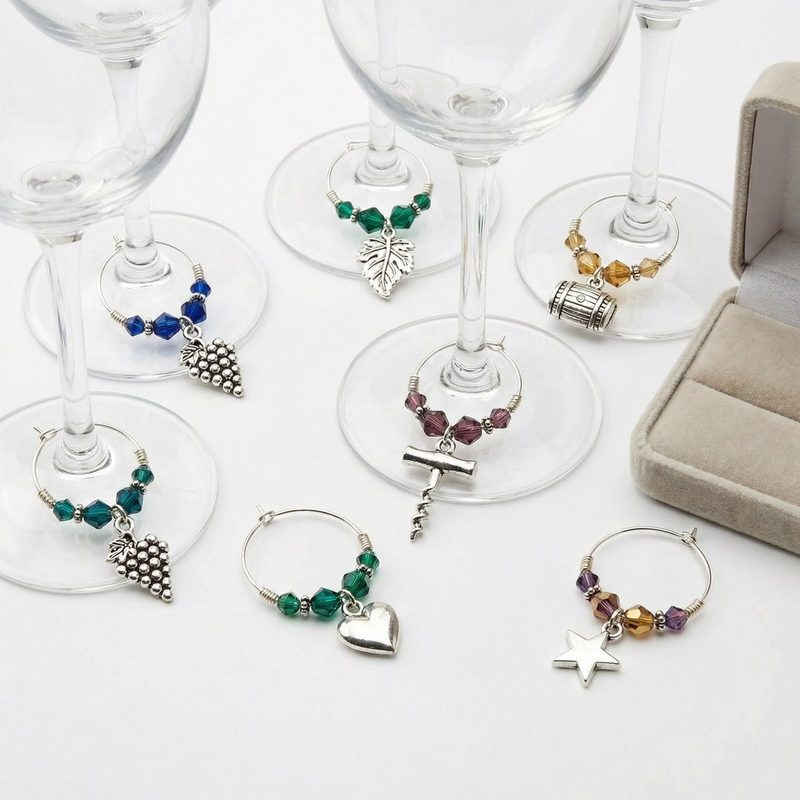
- Private-label glassware product display - custom branded stemware and accessories
- What is the mold number, and can we receive annual photos and a custody confirmation?
- What is the release process and timeline if we move production to another factory?
- Who pays for maintenance, refurbishment, and replacement if the mold is damaged in your custody?
- When a glass factory quotes a custom private-label SKU, there are really two separate transactions happening:
- Send these to any supplier before paying a tooling fee. Their answers tell you everything:
- We respond with FOB pricing, MOQ, tooling terms, and compliance cert PDFs within 24 business hours.
- Fill out the structured inquiry form — it auto-routes to the right sales rep based on your market.
- Certifications: FDA | LFGB | CE | UKCA | Prop 65 Compliant
- Past partners (anonymized): 50+ retailers across US, EU, AU, JP
- Knowing the sequence helps you spot when a supplier is cutting corners:
- — real conversations with our sales team, fastest for custom mold and private-label projects.