Q4 Shipping Cut-Offs & Tariff Timing for Glassware Buyers (2026)
A practical Q4 2026 shipping calendar for wholesale glassware buyers: PO cutoffs, vessel deadlines to the US and EU, the November 10 US tariff suspension expiry, the EU €3 per-customs-entry fee, HS code impacts on landed cost, Incoterms, and a 6-step action checklist — from iWine, a 13-year Yancheng glassware factory exporting 3.5 million units a year to 30+ countries.
On this page
- Why Q4 Timing Is More Expensive Than Q1–Q3
- Q4 2026 Glassware Shipping Calendar
- Tariff Timing: US Suspension Expiry & EU Import Changes
- United States — Tariff Suspension Expires Nov 10, 2026
- European Union — €3 Per Entry Fee (Post-July 1, 2026)
- What iWine does about it
- Duty & Tariff Summary by Market
- How Timing Affects Your Landed Cost
- 6-Step Q4 Action Checklist for Buyers
- 3 Costly Mistakes Buyers Make in Q4
- How to Lock in Your Q4 Shipment with iWine
- Option 1: Email Your RFQ (24h Response)
- Option 2: WeChat (Fastest for Urgent Q4)
- Option 3: Structured Quote Form
- FAQ: Q4 Shipping & Tariffs for Glassware Buyers
- Lock your Q4 production before the calendar works against you
- About iWine — YANCHENG PO SIDENG LTD.
For West Coast delivery, cargo should be on a vessel departing Ningbo/Shanghai by September 21, 2026. East Coast adds 10–14 days. After October 15, only air freight can guarantee December shelf dates.
It can. Glassware currently under the temporary suspension may revert to higher column-2 rates if not cleared before the deadline. We confirm HS codes and current duty status on every proforma invoice so you can plan payment timing.
You move into air-freight territory or accept January 2027 delivery. Air freight for glassware is typically 8–12x ocean cost per kg. We always build a 7-day buffer into our Q4 production schedules.
Most of our glassware falls under HS 7013.39, glassware for table/kitchen. Cheese boards are usually HS 4419.00 or 4421.99 depending on material and finish. The HS code affects duty rate by 3–7%, so we verify it before quoting.
Work backward 7 days from retail launch to find your required arrival date. Add 30 days ocean + 7 days clearance + 7 days buffer.
We provide the codes we use, but your customs broker should confirm the classification that determines your actual duty rate.
FOB gives you freight control. DDP gives you cost certainty. CIF often hides destination fees. Match to your cash flow and risk appetite.
If your products fall under the US suspension ending Nov 10, pay deposit early and push cargo on vessel before the deadline.
Q4 factories are rushed. A sealed pre-production sample protects both sides and avoids costly January returns.
By October, vessel space to Los Angeles and Rotterdam is often 80% committed. Buyers who wait pay premium rates or miss the window entirely.
Lead-crystal, borosilicate, decorated glassware, and gift sets can fall under different HS subheadings with rate spreads of 5–15%.
A practical calendar for wholesale buyers sourcing glass kitchenware, barware, and gift sets from China in Q4 2026. Lock vessel space, avoid tariff surprises, and protect your landed cost.
Every Q4 we see the same pattern: buyers who planned in August sail smoothly into January restocking. Buyers who waited until October end up paying air-freight rates for ocean cargo. This guide gives you the exact cutoffs, tariff deadlines, and landed-cost assumptions we use at iWine — a 13-year glassware factory in Yancheng — so you can make decisions now instead of reacting later.
Ocean freight from Ningbo or Shanghai to the US West Coast is normally 22–28 days. In Q4, that stretches to 28–40 days because of port congestion, rolled bookings, and pre-Lunar-New-Year front-loading. Add 7–14 days for customs clearance and inland trucking, and a September 30 vessel can arrive at your warehouse as late as November 20.
The rule: if your PO is not confirmed by September 15, you are already in the tight zone. After October 15, you are paying for air freight or accepting January delivery.
Use this calendar as a baseline for US and EU wholesale orders. Adjust for your specific port and broker lead times.
Certain glassware and kitchenware items have been under a temporary suspension of additional Section 301 tariffs. If cargo is not entered before November 10, 2026, column-2 rates may apply. The rate difference can be 7–25% depending on HS subheading.
We list the HS code, current duty assumption, and tariff deadline on every proforma invoice. If your market is at risk, we flag it before you pay the deposit and adjust production scheduling to hit the vessel date.
The same wine glass set can land at very different costs depending on when you order and ship. Here is a realistic multiplier range on FOB price.
- Does the US tariff suspension ending Nov 10 affect my landed cost?
- How does the EU €3 per customs entry rule change my order?
- Can you ship DDP to Amazon FBA warehouses?
- What happens if my container misses the October vessel?
- Which HS code applies to glassware and cheese boards?
- PO confirmed for ocean Christmas delivery
- Cargo on vessel (Ningbo/Shanghai → US West Coast)
- Last production slot for custom OEM
- PO confirmed for stock-design items
- Last vessel for EU/UK pre-Christmas shelf
- Air-freight only for December delivery
- Column-2 reversion after Nov 10
- EUR/GBP fluctuation + CHIEF/CDS changes
- Confirm EORI & importer of record
- CBSA holiday inspections slow clearance
- Target for all Christmas stock
- Ocean FOB, vessel Oct 21–Nov 5
- Acceptable for Jan/Feb 2027 stock
- Order placed after tariff reversion
- Confirm HS code & lock PO before deadline
- Confirm your target in-store date
- Verify HS codes with your broker
- Lock vessel space before Sep 21
- Q4 space sells out. Booking 6 weeks ahead is normal. Ask us for a shipping schedule with confirmed cutoffs.
- Waiting until October to book freight
- Book vessel space by mid-September, even before production finishes.
- Ignoring the importer of record requirement
- Confirm your importer of record and broker before the PO is signed.
- Assuming all glassware has the same duty rate
- Get a written HS classification for each SKU before comparing quotes.
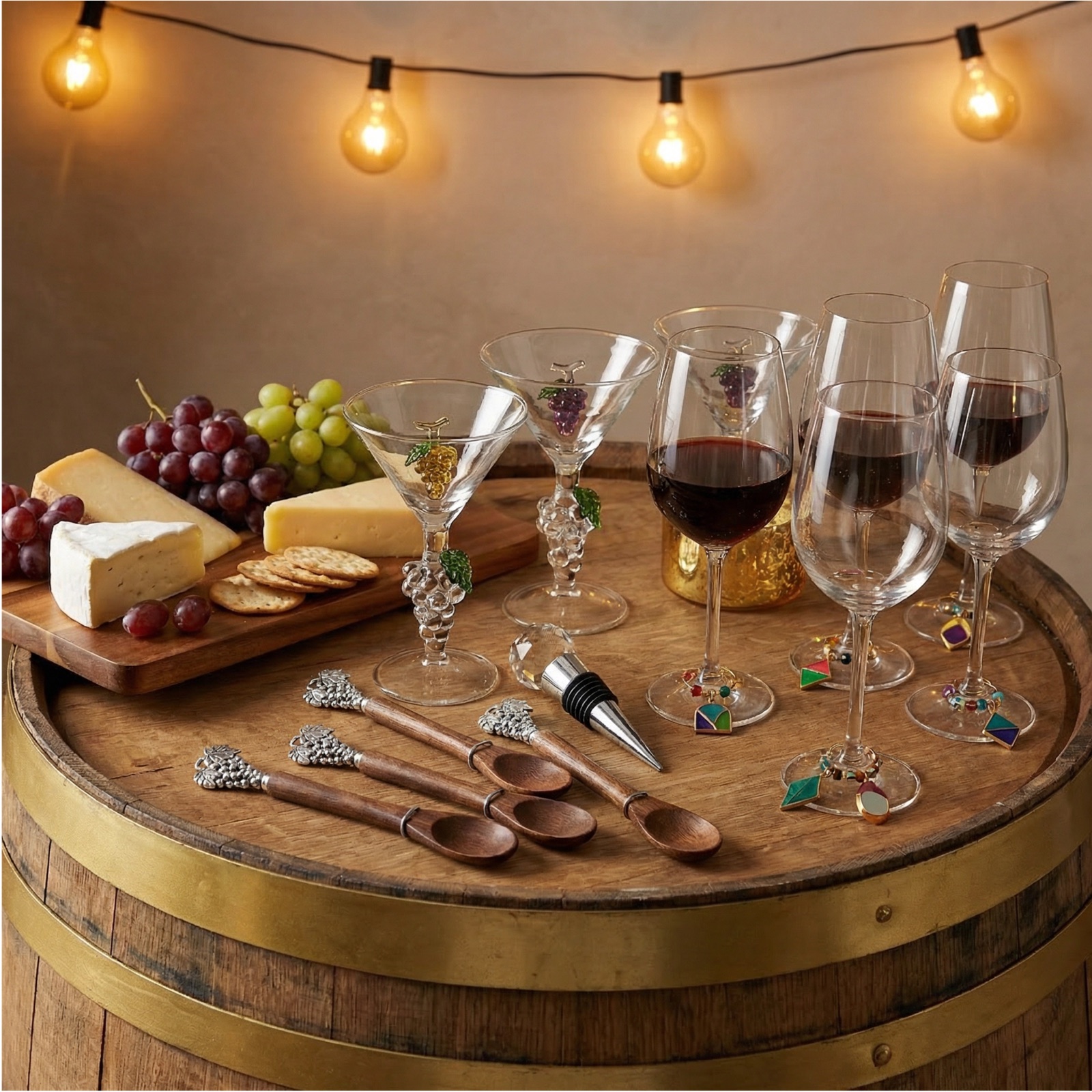
- Glassware wholesale gift sets ready for Q4 shipping
- Run through this checklist before you sign any PO in Q4.
- We reply with FOB pricing, MOQ, lead time, HS code, and the latest vessel schedule.
- Use the inquiry form to route your request to the right sales rep by market.
- Certifications: FDA | LFGB | CE | UKCA | Prop 65 Compliant
- Services: OEM, private label, custom decals/etching, gift set packing, FBA prep
- — we can confirm vessel space and tariff questions in real time.
- Lock your Q4 production before the calendar works against you
- — we reply within 24 business hours with shipping schedule, HS codes, and FOB pricing.
- OEM, private label, custom decals/etching, gift set packing, FBA prep