Textured, Ribbed & Vintage-Inspired Glassware: The 2026 Trends Worth Stocking
A B2B selection guide to 2026's strongest glassware trend: why ribbed and textured glass searches are up 40%+, the 4 texture families worth stocking (ribbed/fluted, hammered & dimpled, vintage Art Deco pressed, optic twist) and one to skip, retail vs. factory FOB price benchmarks, 4 production routes compared (machine-pressed, machine-blown, hand-blown, acid-etch), 6 QA checks for ribbed rims and annealing, MOQ 300pcs on stock designs, and 3 mistakes buyers make with trend glassware — from iWine, a 13-year Yancheng glassware factory with in-house mold development, exporting 3.5 million units a year to 30+ countries.
On this page
- Why Texture Is 2026's Strongest Glassware Trend
- 1. The "quiet luxury" hangover
- 2. Social media does the merchandising
- 3. HORECA's practical math
- The 4 Texture Families Worth Stocking (and 1 to Skip)
- What It Sells For: Retail vs. Factory FOB Benchmarks
- How Texture Actually Gets Made: 4 Production Routes Compared
- The 6 QA Checks That Separate Good Ribbed Glass from Returns
- 3 Mistakes Buyers Make With Trend Glassware
- How to Get Started with iWine
- Option 1: Send a Quick Quote (24h Response)
- Option 2: Chat on WeChat (Fastest for Custom Molds)
- Option 3: Submit the Full Quote Form
- FAQ: Textured & Ribbed Glassware Wholesale
- Ready to stock the texture trend for 2026?
- About iWine — YANCHENG PO SIDENG LTD.
Ribbed & textured glassware is 2026's strongest wholesale trend — searches up 40%+. See the 4 texture families worth stocking, FOB price benchmarks, MOQ 300pcs, and QA checks for ribbed rims. Get factory quotes in 24h.
Yes. Send a sketch, reference photo, or a physical sample and our mold team will produce a 2D/3D drawing for approval, then cut a production mold. Mold development takes 15–25 days, followed by 35–50 days of production. For textured decoration on existing stock bodies, lead time is 30–40 days.
Stock textured designs and custom decoration (decal, etching, gold rim) on our existing bodies: 300 pcs per SKU. A brand-new custom mold (your own rib pattern or shape) typically starts at 1,000–3,000 pcs depending on glass weight and cavitation. We can advise the exact volume after reviewing your design.
Ours do — but this is exactly where cheap textured glass fails. Ribs create thick-and-thin zones in the wall, so uneven annealing causes cracking under thermal shock. Every textured SKU we ship is annealed on a controlled curve and batch-tested with 0°C-to-100°C thermal cycling. Ask any supplier for their test method, not just a 'yes'.
The same as smooth glass: FDA food-contact for the US, LFGB for Germany/EU, Prop 65 for California, and CE/UKCA marking where sold as houseware gift sets. Texture changes none of the food-contact requirements — but it does make third-party lab testing more important, since etched or printed texture zones need their own migration tests. All five certs are available as PDFs with our company name.
Yes — mixed SKU containers are our standard practice. Combine textured wine glasses, tumblers, cheese boards, and accessories in a single order and hit the MOQ across the product line rather than per design. This is the lowest-risk way to test a trend SKU.
Every shipment includes a 2% overage allowance free of charge to cover transit breakage, and our defect rate on textured stock items runs 0.8–1.5% (industry average: 3%). Textured SKUs ship in individual cells or wraps with partitioned cartons — never loose-packed — because ribs are chip-prone in transit if packed like smooth glass.
The flagship 2026 trend. Vertical ribs on wine glasses, highballs, and tumblers catch light and photograph beautifully — which is exactly why this family dominates Pinterest and boutique retail. Works in both clear and tinted glass (smoke grey, sage, amber).
Organic dimpled surfaces that read as artisanal and handcrafted. Strong in the HORECA channel because the texture disguises water spots and fingerprints between washes — a genuine cost-per-use argument for restaurants.
Geometric pressed relief inspired by 1920s–70s glassware. Vintage-inspired coupes and martini glasses are the fastest-growing barware segment for boutique liquor brands and cocktail bars ordering branded glass.
Spiral optic twists on tumblers and stemless wine glasses. A quieter cousin of the ribbed trend — it sells to the same buyer who wants texture that looks slightly less mass-market.
Screen-printed faux wear and distressed patterns sit on the surface, fail the look after 20 dishwasher cycles, and can complicate food-contact compliance. Texture should be in the glass, not printed on it.
The rim must be fire-polished smooth even where ribs meet the lip. Unfinished rib-to-rim transitions are the #1 chipping complaint in the first 30 days at retail.
Ribs create thick and thin zones. Measure the thinnest valley — if wall variation exceeds roughly 1.5mm between ridge and valley on a tumbler, thermal-shock failure rates climb.
Require 0°C to 100°C cycling evidence on the actual textured SKU, not a certificate for a smooth cousin from the same factory line.
Ribbed edges chip against each other in transit. Insist on individual cells, wraps, or partitions — 3-layer master cartons with dividers, not bulk loose-packing.
FDA, LFGB, Prop 65 as applicable — issued in the supplier's company name, covering the decorated/textured surface. Generic lab reports without the supplier's name are worthless in an audit.
A new rib pattern or shape means mold fees plus 1,000–3,000 pcs committed. Buyers who skip the test phase tie up cash in a trend SKU that may need a design revision after one season.
Test with 300 pcs of a stock textured body + custom decal or etching first — then commit to your own mold once retail data confirms demand.
Rib spacing, depth, and rim transition look completely different in hand than on screen. Renders hide seam lines, wall variation, and the optical distortion that makes cheap ribs look wavy.
Always approve a physical sample — and hold it under warm water to check for seam sharpness before signing off.
The single most expensive mistake: textured SKUs loose-packed arrive with 5–8% chipping versus under 1% when partitioned. Freight savings of $0.05/unit become replacement costs of $0.40/unit.
Ribbed and textured glassware searches are up 40%+ year over year. If you wholesale to boutique retail, gift shops, or the HORECA channel, this guide shows which texture families to stock, what they cost at the factory, and the QA checks that separate good ribbed glass from returns.
Plain solid-color glassware carried 2025. In 2026, buyers want the same understated palette with something for the eye — and vertical ribs deliver it without a single decal. Retail buyers tell us textured pieces lift average order value 15–20% over plain equivalents in the same price tier.
Ribs, flutes, and hammered facets photograph dramatically — light catches every groove. Vintage barware and custom glass searches are up 40%+ across Pinterest and Google, and boutique retailers increasingly stock what their customers already screenshotted.
Not all texture is equal. These are the families converting at retail in 2026 — based on what our retail and HORECA customers reordered, not just what trend reports claim.
• FOB ranges reflect 2026 quotes for machine-pressed textured stock designs from Yancheng, China • iWine MOQ: 300 pcs on stock textured designs and custom decoration on existing bodies • Tinted glass (smoke, sage, amber) typically adds $0.15–$0.40/pc over clear
Texture is where cheap glassware goes to fail. Ribs and relief patterns concentrate stress and hide defects, so run every candidate supplier through these checks before the PO:
something for the eye — and vertical ribs deliver it without a single decal. Retail buyers tell us textured pieces lift average order value 15–20% over plain equivalents in the same price tier.
Typical US/EU retail price bands versus factory FOB ranges, so you can sanity-check the margin before you fall in love with a SKU:
Start with machine-pressed stock textured bodies at MOQ 300 pcs and add your branding (etched logo, printed decal, colored rim). You test the trend this season and commission your own mold for next season — with retail data instead of a hunch.
- What is the MOQ for custom textured glassware?
- Do ribbed glasses pass dishwasher and thermal-shock testing?
- Which certifications apply to textured glassware?
- Can I mix ribbed glasses with other SKUs in one container?
- What happens if my ribbed glasses arrive chipped?
- Ribbed & Fluted (Vertical Ribs)
- Vintage / Art Deco Pressed Patterns
- Avoid: Printed 'Fake Antique' Distressing
- Ribbed wine glasses (set of 4)
- Fluted highball / tumbler sets
- Vintage coupe / martini glasses
- Textured glass + wood board gift sets
- Acid-etch / deep-etch decoration on stock body
- Rim finishing on ribbed bodies
- Food-contact certificates on the textured SKU
- Ordering a custom mold before testing demand
- Judging ribbed glass from renders, not samples
- Packing textured glass like smooth glass
- Write the packing spec into the PO: individual cells or wraps, partitioned 3-layer cartons.
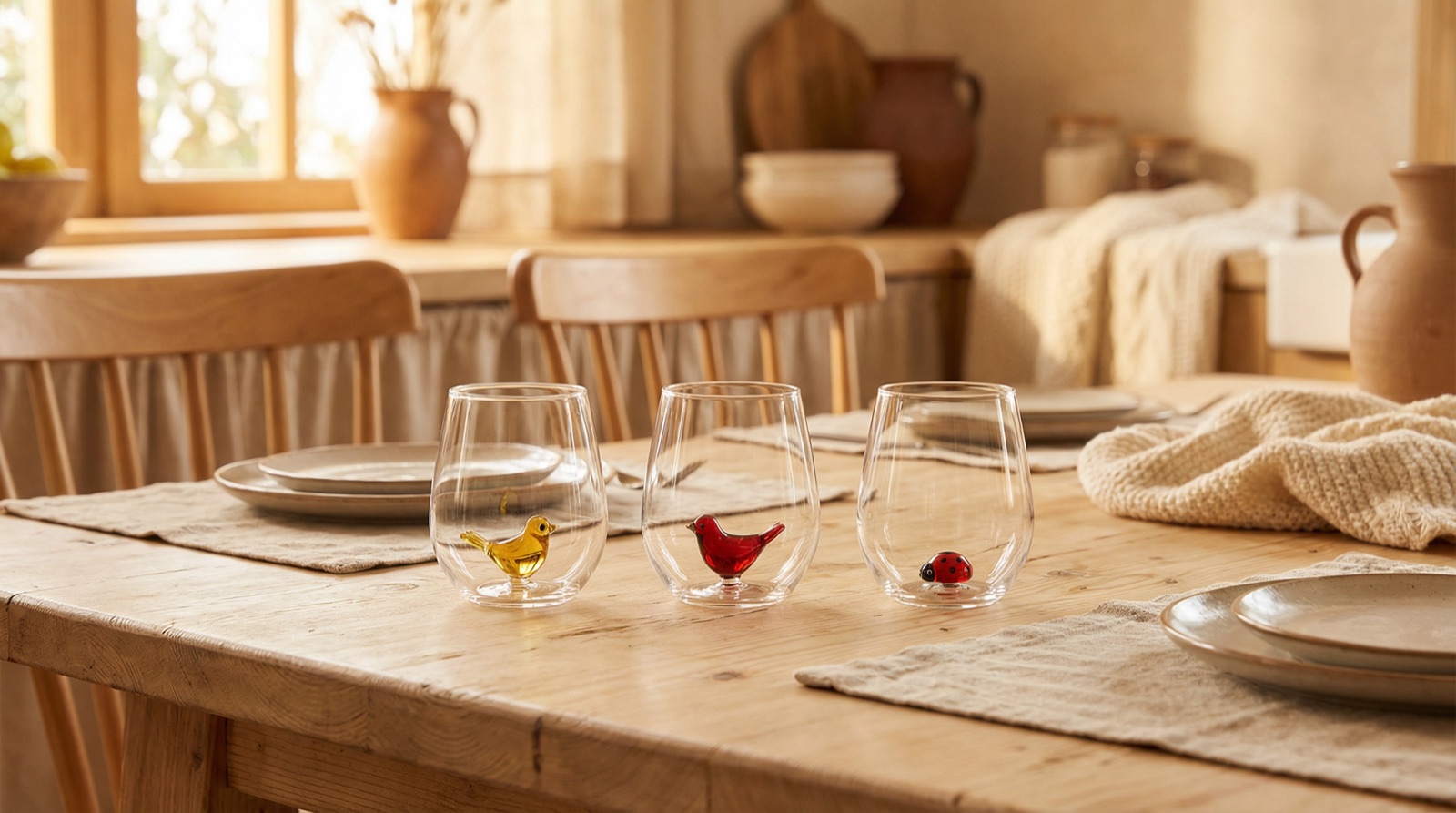
- Textured and vintage-inspired glass cups styled in a warm kitchen setting
- what's your wall-thickness tolerance on ribbed pieces, and how do you anneal for it?
- Wholesale glassware set including stemware ready for retail programs
- Three forces are converging, and all three show up in our order book:
- We respond with FOB pricing, MOQ, lead time, and compliance cert PDFs within 24 business hours.
- Fill out the structured inquiry form — it auto-routes to the right sales rep based on your market.
- Certifications: FDA | LFGB | CE | UKCA | Prop 65 Compliant
- Past partners (anonymized): 50+ retailers across US, EU, AU, JP
- Plain solid-color glassware carried 2025. In 2026, buyers want the same understated palette
- • FOB ranges reflect 2026 quotes for machine-pressed textured stock designs from Yancheng, China
- • iWine MOQ: 300 pcs on stock textured designs and custom decoration on existing bodies
- • Tinted glass (smoke, sage, amber) typically adds $0.15–$0.40/pc over clear
- How Texture Actually Gets Made: 4 Production Routes Compared
- The 6 QA Checks That Separate Good Ribbed Glass from Returns
- — real conversations with our sales team, fastest for custom mold and private-label textured projects.
- — we reply within 24 business hours with FOB pricing, MOQ, and compliance certs.